

A dog may lick itself excessively due to skin irritation, allergies, anxiety, pain, or habit, and the cause is identified by observing patterns, checking the skin, and consulting a vet if needed.
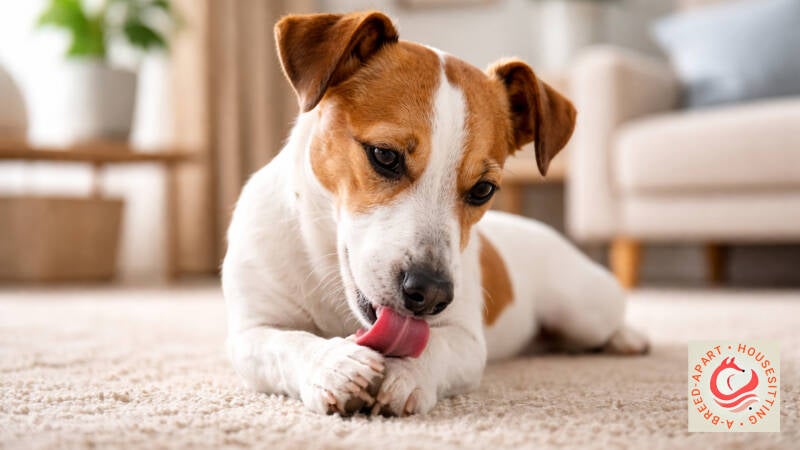
A dog may lick itself excessively due to skin irritation, allergies, anxiety, pain, or habit, and the cause is identified by observing patterns, checking the skin, and consulting a vet if needed.
If you’ve noticed your dog licking its paws, legs, or belly with increasing enthusiasm, you’re not alone. Excessive licking is one of the most common behaviour questions we hear from rural homeowners, particularly those living with dogs that spend plenty of time outdoors.
As a mature, professional housesitting couple, we’ve cared for dogs across the countryside, from stoic Labradors to sensitive spaniels, and persistent licking is often an early signal that something isn’t quite right. Sometimes it’s physical. Sometimes behavioural. Often it’s a combination of both.
The key is knowing when licking is normal self-maintenance, and when it’s a sign that your dog needs closer attention.
When Is Licking Normal Behaviour?
Dogs do lick themselves as part of normal grooming and self-soothing. A brief paw lick after a muddy walk or a quick clean after dinner is entirely ordinary.
Licking becomes a concern when it is:
- Frequent or prolonged
- Focused on one specific area
- Causing hair loss, redness, or broken skin
- Disrupting sleep or daily routines
At that point, it’s less about hygiene and more about discomfort or stress.
Common Reasons Dogs Lick Themselves Excessively
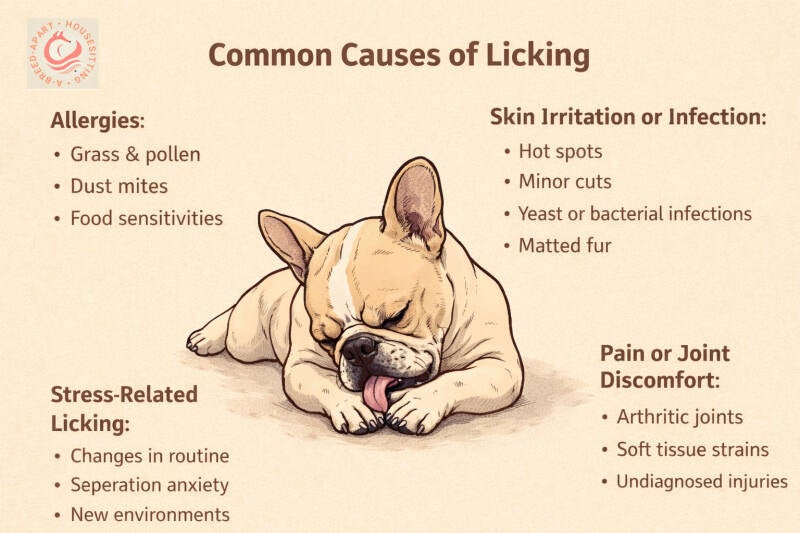
1. Allergies (The Most Common Cause)
Allergies are the leading reason dogs lick persistently, particularly paws and bellies.
Common triggers include:
- Grass and pollen (especially spring and summer)
- Dust mites or mould spores indoors
- Food sensitivities (often chicken, beef, wheat, dairy)
- Flea saliva, even from a single bite
Dogs don’t usually sneeze like humans. Instead, allergies show up through licking, chewing, ear scratching, and irritated skin.
2. Skin Irritation or Infection
Any break in the skin can become itchy or painful.
This includes:
- Hot spots
- Minor cuts or thorn scratches
- Yeast or bacterial infections
- Matted fur holding moisture against the skin
Rural dogs are particularly prone due to long grass, hedgerows, and damp conditions.
3. Anxiety or Stress-Related Licking
Licking releases endorphins and can become a coping mechanism.
Triggers may include:
- Changes in routine
- Being left alone more than usual
- New environments or visitors
- Fireworks or storms
This is often called compulsive licking, and it can persist even after the original stressor has passed.
4. Pain or Joint Discomfort
Dogs will often lick the area closest to discomfort.
Common examples:
- Arthritic joints
- Soft tissue strains
- Undiagnosed injuries
Older dogs may lick wrists, elbows, or hips repeatedly. It’s subtle, but important.
5. Boredom or Lack of Mental Stimulation
Dogs left under-stimulated may lick simply because there’s nothing else to do.
This is more common in:
- Working breeds
- Highly intelligent dogs
- Dogs recovering from injury with reduced exercise
In these cases, licking becomes habitual rather than medical.
A-Breed-Apart Insights Box
From our hands-on experience caring for dogs in rural homes:
- Dogs with seasonal allergies often lick paws most intensely after evening walks.
- Anxiety-related licking increases noticeably during owners’ absence or routine changes.
- Older dogs frequently lick joints long before showing visible stiffness.
These patterns repeat consistently across long-term housesits.
ICF Otoact Ear Cleaner for Cats and Dogs

A straightforward ear-cleaning solution designed to help prevent wax build-up and discomfort in breeds prone to ear issues, including Working Cocker Spaniels.

How to Work Out What’s Causing the Licking
Step-by-Step Check at Home
Before assuming the worst, take a calm, practical approach.
- Check the area closely
Look for redness, swelling, broken skin, discharge, or hair loss. - Note when it happens
After walks? At night? When you leave the room? - Consider seasonal patterns
Spring and summer often point towards allergies. - Review diet changes
New treats or foods introduced in the last 6–8 weeks matter. - Assess routine and stimulation
Has exercise, training, or enrichment reduced recently?
If licking persists for more than a few days, or skin damage is visible, it’s time to involve your vet.
When Should You See a Vet?
You should seek veterinary advice if:
- Skin is broken or weeping
- Licking worsens despite intervention
- Your dog seems unsettled or in pain
- There is limping, stiffness, or behavioural change
According to the RSPCA, persistent licking is often one of the first outward signs of discomfort and should not be ignored.
The Blue Cross also advises early assessment to prevent minor irritation becoming a chronic skin condition.
Practical Ways to Reduce Excessive Licking
Immediate Actions
- Rinse paws after walks during pollen season
- Keep fur trimmed around problem areas
- Use vet-approved soothing balms
- Increase enrichment with food puzzles or scent games
Longer-Term Solutions
- Vet-guided allergy testing or elimination diets
- Behavioural support for anxiety
- Joint supplements for older dogs
- Consistent routines, especially during absences
Avoid cones unless necessary. They address symptoms, not causes.

Marketplace: Useful Products to Support Dogs Who Lick Excessively
Some of the links above are affiliate recommendations. They help support the continued publication of our guides and the practical pet and home care advice we provide, at no additional cost to the reader.
Zesty Paws Aller-Immune Chews

Soft chews support immune balance and skin health using probiotics, omega fatty acids, and antioxidants, helping reduce itching, seasonal allergies, and paw licking while promoting overall canine wellbeing daily use.
Flea and Tick Dog Shampoo

Medicated shampoo kills fleas and ticks on contact, soothes irritated skin, removes odours, and cleans thoroughly, offering fast relief without harsh chemicals while supporting a healthy, comfortable coat for dogs.
MudBuster Portable Dog Paw Cleaner

Portable paw cleaner uses gentle bristles and water to remove mud, grit, and allergens quickly, keeping floors clean and reducing paw irritation after walks in all weathers and outdoor conditions.
Frequently Asked Questions
FAQ: Is it normal for dogs to lick their paws every day?
Occasional paw licking is normal, but daily, prolonged licking often indicates irritation, allergies, or discomfort that should be investigated.
FAQ: Can anxiety really cause excessive licking?
Yes. Anxiety-related licking is common and often linked to routine changes, separation, or environmental stressors.
FAQ: Should I stop my dog licking altogether?
No. The goal is not to stop licking, but to identify and resolve the underlying cause driving excessive behaviour.
FAQ: Can food cause licking even without stomach issues?
Yes. Food sensitivities often present through skin symptoms rather than digestive upset.
FAQ: Do older dogs lick more than younger dogs?
Often yes, particularly if joint discomfort or reduced mobility is present.
Excessive licking is rarely “just a habit.” It’s your dog communicating discomfort, stress, or unmet needs. Addressed early, most causes are manageable with straightforward steps and professional guidance.
If you live rurally, where allergens, weather, and terrain add extra variables, close observation becomes even more important.
If you found this guide useful, you may also wish to read:
- Natural Remedies For Separation Anxiety
- Frosty Paws: Winter Safety Tips for Dogs and Cats
- Are Veterinary Reforms On The Way? What Pet-Owners Should Know
Have you noticed a pattern in when your dog licks most? You’re welcome to share this article with friends or local dog-owner groups who may find it helpful.

Author Bio
Glenn Bauer, author of Housesitters Unleashed, is a trusted professional specialising in house and pet sitting for rural homes and estates across the Cotswolds, West Oxfordshire and Wiltshire. Together with his wife Mandy, he provides bespoke care for pets and properties, combining experience, integrity, and absolute respect for privacy.
Add comment
Comments