

A homeowner can decide if a British Shorthair is suitable by understanding its calm temperament, strong attachment to routine and place, and its measured response to unfamiliar people and change.
Why the British Shorthair Remains a British Favourite
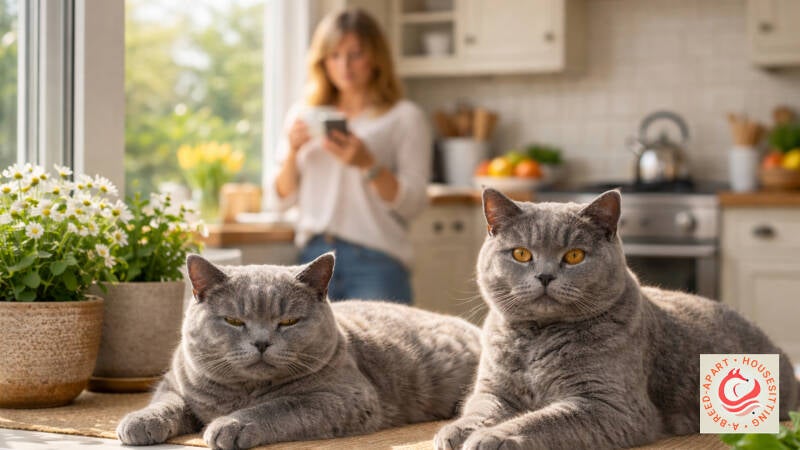
The British Shorthair is one of the most recognisable and widely kept cats in the UK, particularly in established households that value predictability over novelty. Solidly built, emotionally even, and quietly observant, this breed has long appealed to owners who want a companion rather than a constant presence.
Through our work as a mature, professional housesitting couple, Glenn and Mandy have cared for British Shorthairs in village cottages, larger rural homes, and long-established family houses. What stands out consistently is not aloofness, but composure. These cats notice everything, react slowly, and prefer life to remain much as it always has.
This article forms the first full profile in our Most Loved Cats series and sets the tone for a practical, experience-led exploration of Britain’s most commonly encountered feline companions.
Temperament at a Glance
Typical British Shorthair traits (general tendencies):
- Sociability: Moderate
- Independence: High
- Vocalisation: Low
- Energy level: Low to moderate
- Affection style: Proximity rather than lap-sitting
- Confidence: Quietly self-assured
British Shorthairs are rarely demanding. They prefer to be near rather than on you, and they value predictability over stimulation.
Attachment Style: People, Place, or Routine?
British Shorthairs attach most strongly to routine and environment, with people forming a steady, secondary anchor.
They are:
- Loyal to familiar households
- Slow to warm to strangers
- Unlikely to seek reassurance overtly
This means they often cope better than some breeds with owners being away, provided their environment and routines remain unchanged. However, they do not respond well to unnecessary interference or over-handling by unfamiliar people.

Suitability for Rural and Semi-Rural Homes
This breed is particularly well suited to quieter homes.
In rural settings, British Shorthairs typically:
- Settle well into calm, low-traffic environments
- Prefer defined territories
- Avoid confrontation with other animals
- Move deliberately rather than impulsively
Outdoor access should be managed carefully. Many British Shorthairs enjoy supervised or limited access, but they are not natural wanderers. Their strength lies in stability, not exploration.
Routine Needs and Daily Expectations
British Shorthairs thrive on consistency.
Daily expectations include:
- Regular feeding times
- Minimal but predictable play sessions
- Quiet companionship rather than active engagement
- Long rest periods
They do not require high levels of enrichment, but they do require that their day follows a familiar rhythm.
Grooming, Health, and Physical Considerations
Despite their dense coat, grooming needs are modest.
Key considerations:
- Weekly brushing is usually sufficient
- Weight management is important due to their stocky build
- They are prone to becoming sedentary if overfed
- Older cats may develop stiffness if exercise is neglected
Owners should monitor gradual changes rather than expecting sudden signals of discomfort.
How British Shorthairs Cope with Owner Absence
British Shorthairs often appear to cope well when owners are away, but this can be misleading.
Typical responses include:
- Reduced interaction
- Increased sleeping
- Quiet observation rather than engagement
They rarely protest, but subtle changes in appetite or grooming may indicate unease. Consistency matters more than companionship intensity.
Common Misunderstandings About the British Shorthair
“They don’t like affection.”
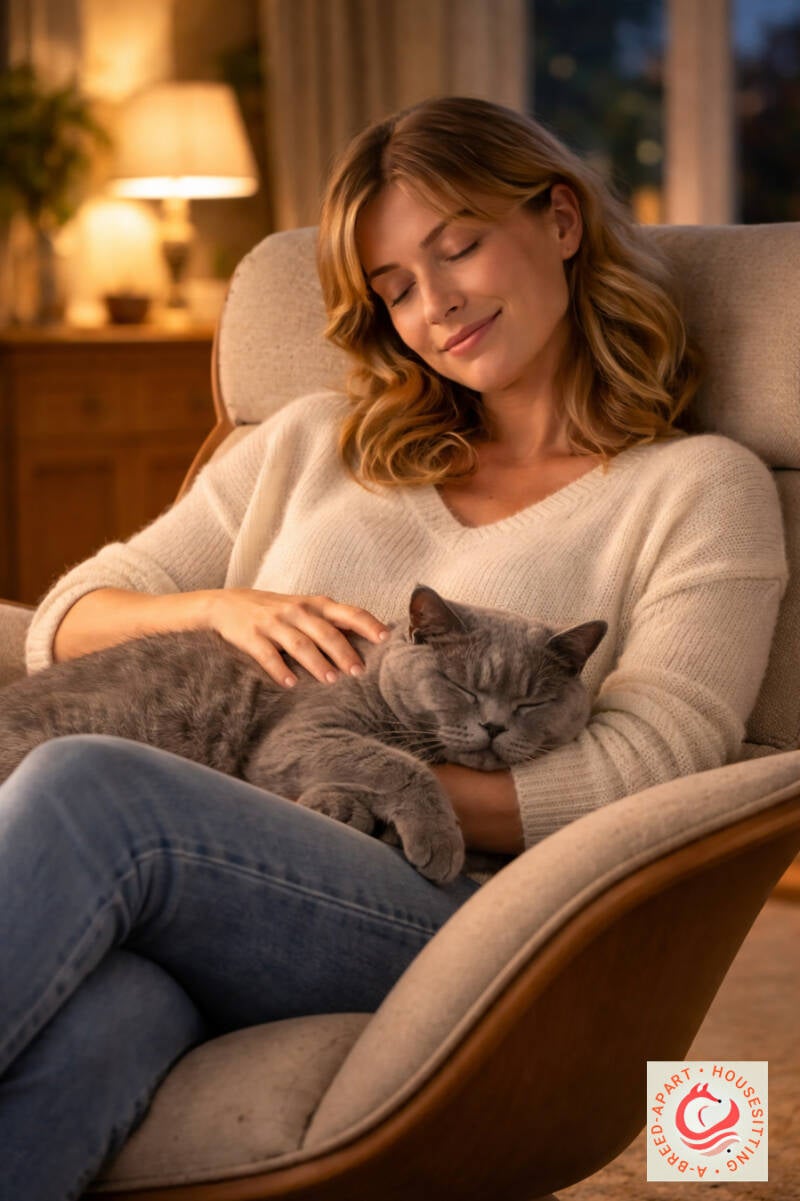
They do, but on their terms and without fuss.
“They’re low maintenance.”
They are low drama, not low responsibility.
“They’re fine being ignored.”
They notice absence keenly, even if they don’t protest.
British Shorthairs and Housesitting Arrangements
From a housesitting perspective, British Shorthairs are among the more predictable breeds.
They respond best when:
- One consistent sitter is present
- Handling is minimal and respectful
- Feeding and access routines are followed precisely
Common mistakes include:
- Attempting to force interaction
- Changing feeding locations
- Introducing novelty toys or routines
Clear written routines are essential for maintaining equilibrium.
This site contains affiliate links to products. We may receive a commission for purchases made through these links at no additional cost to you. As Amazon Associates, we earn from qualifying purchases.
Is the British Shorthair Right for You?
Well suited if you:
- Value calm, predictable companionship
- Live in a quiet or rural household
- Prefer a cat that observes rather than demands
- Travel occasionally but maintain strong routines
May struggle if you:
- Want a highly interactive or playful cat
- Change routines frequently
- Expect overt displays of affection
A-Breed-Apart Insights
A-Breed-Apart Insights:
- British Shorthairs often settle faster than other breeds during long housesits, but show stress through subtle withdrawal rather than behaviour changes.
- They respond poorly to multiple carers rotating through a household.
- Appetite changes are often the first indicator that routine disruption is affecting them.
Cat Calming Plug In Pheromone Diffuser

Helps reduce feline stress by releasing calming pheromones, supporting settled behaviour during change, travel, or absence, without sedation, scent, or ongoing effort from owners daily.
Wireless Cat Water Fountain

Encourages regular hydration with quiet, cordless operation, ideal for kitchens and living spaces, supporting kidney health without trailing cables or constant refilling.
SureFeed Microchip Pet Feeder

Ensures accurate portion control and protects food from other pets, maintaining routine feeding patterns for cats who thrive on consistency and controlled access.
Cat Scratcher Furniture

Provides a durable scratching surface that supports natural behaviour, protects furnishings, and offers gentle daily movement for heavier or less active cats indoors.
Frequently asked questions
These frequently asked questions address the practical points homeowners most often raise when considering a British Shorthair, from routine needs to suitability during absence. Each answer is grounded in everyday experience, helping you make informed, confident decisions without unnecessary complication or assumption.
Are British Shorthairs good with housesitters?
Yes. They usually tolerate a consistent, low-key sitter well, provided routines are followed exactly.
Do British Shorthairs need outdoor access?
No. Many are content indoors, though some enjoy controlled outdoor access.
Are they suitable for older households?
Yes. Their calm nature and low activity levels suit quieter homes well.
Do British Shorthairs cope with routine changes?
They tolerate change poorly. Stability is key to their wellbeing.
The British Shorthair is not a cat for those seeking entertainment. It is a cat for those who value steadiness, familiarity, and quiet companionship. When routines are respected and environments remain predictable, this breed settles deeply and contentedly.
If you found this profile useful, you may wish to explore other breeds in our Most Loved Cats series, each offering a different balance of temperament, independence, and care needs.
Do you live with a British Shorthair, or are you considering one? You’re welcome to share your experience or pass this guide on to someone weighing up the same decision.
Add comment
Comments