

Few dog breeds sit quite so comfortably within the fabric of British domestic life as the Cavalier King Charles Spaniel. Graceful without being fragile, affectionate without being demanding, this small companion dog has long been favoured in cottages, country houses, and quieter family homes.
This guide explains what prospective owners and homeowners should understand before welcoming a Cavalier into their lives.

Why Cavaliers Remain Popular in the UK
The Cavalier King Charles Spaniel was originally bred as a companion dog, not a working animal. That heritage still defines the breed today.
For homeowners seeking a dog that integrates calmly into household life, rather than dominating it, Cavaliers often appeal because they are:
- Naturally people-focused
- Adaptable to different property sizes
- Suited to moderate daily activity
- Typically polite with visitors and other animals
However, popularity has brought challenges, particularly around health. Responsible ownership starts with informed expectations.
What Is the Temperament of a Cavalier Spaniel?
Cavaliers are affectionate, gentle, and socially oriented dogs that form strong attachments to their people.
Key temperament traits include:
- Strong desire for human companionship
- Calm, friendly disposition with visitors
- Generally tolerant of children and older adults
- Low territorial instinct, making them poor guard dogs
They are emotionally sensitive dogs. This sensitivity makes them intuitive companions but also means they can struggle if left alone for long periods.
Practical insight: Cavaliers suit homes where someone is present for much of the day, or where professional pet care is arranged during absences.

Are Cavaliers Suitable for Rural and Countryside Living?
Yes, provided their exercise and safety needs are managed carefully.
Cavaliers enjoy countryside walks and exploration, but they are not robust outdoor dogs. They should not be expected to roam unsupervised or cope with harsh weather for extended periods.
Well-suited rural environments include:
- Secure gardens
- Quiet footpaths and lanes
- Predictable walking routes
They are happiest indoors, close to their people, rather than living a largely outdoor lifestyle.
How Much Exercise Does a Cavalier Spaniel Need?
A Cavalier requires approximately 45–60 minutes of exercise per day.
This is best delivered as:
- One longer walk or two shorter walks
- Gentle lead walking rather than intense running
- Occasional off-lead time in secure areas
Despite their spaniel heritage, most Cavaliers are content with steady, moderate activity rather than vigorous exercise.
Over-exercise, particularly in young or older dogs, can aggravate joint and cardiac issues.
What Health Issues Should Owners Be Aware Of?
Cavalier King Charles Spaniels are predisposed to several inherited health conditions. Awareness and proactive care are essential.
Common concerns include:
- Mitral Valve Disease (MVD): A progressive heart condition common in the breed
- Syringomyelia (SM): A neurological condition associated with skull formation
- Ear infections: Due to long, feathered ears
- Weight gain: If diet and exercise are poorly managed
Average lifespan ranges from 9 to 14 years, with responsible breeding and veterinary oversight playing a decisive role.
Authoritative guidance can be found via the RSPCA and the British Veterinary Association.
Are Cavaliers Easy to Train?
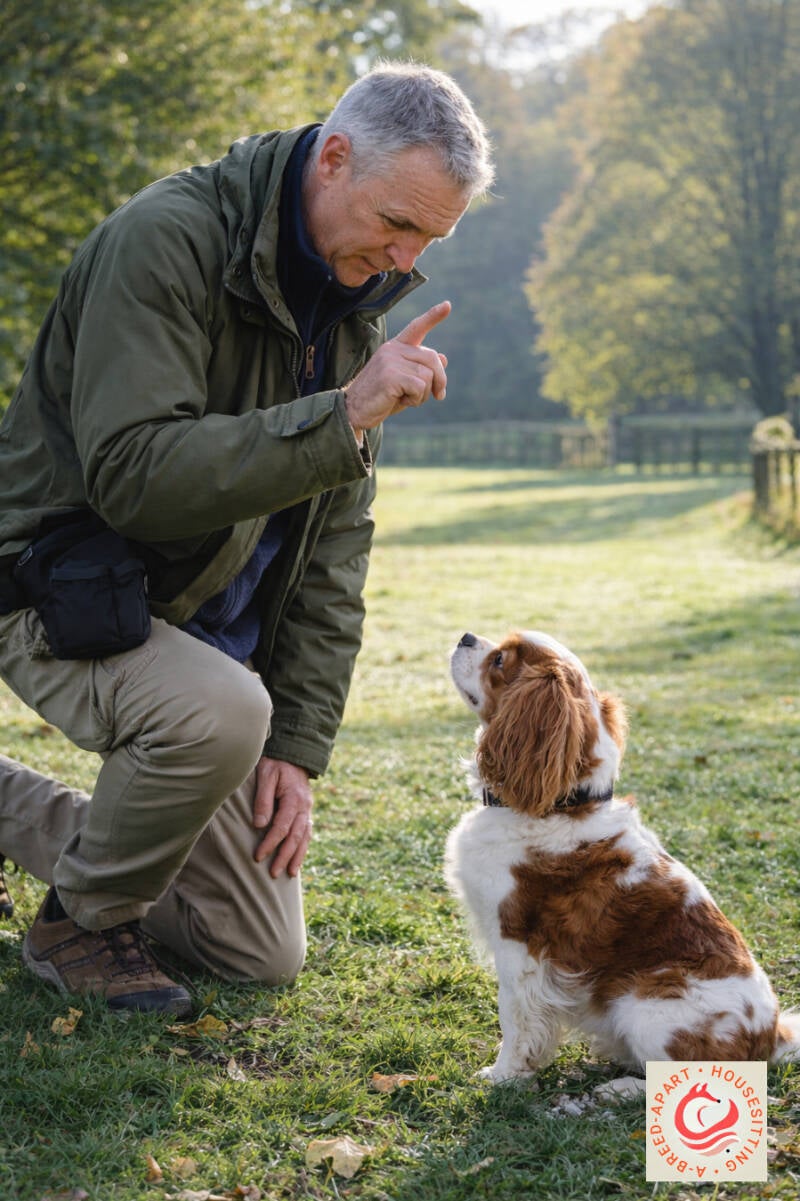
Yes, when training is calm, consistent, and reward-based.
Cavaliers respond well to:
- Positive reinforcement
- Short, structured training sessions
- Gentle correction rather than raised voices
They are eager to please but can lose confidence if training is harsh or inconsistent.
Priority training areas include:
- Recall, particularly in rural settings
- Lead manners
- Calm behaviour when left briefly alone
Do Cavaliers Cope Well with Other Pets?
With proper introductions, Cavaliers typically integrate well into multi-pet households.
They are often comfortable living alongside:
- Other dogs
- Cats
- Poultry, when supervised and trained
Their lack of strong prey drive makes them one of the safer breeds for mixed-animal homes, though early socialisation remains important.
Common Mistakes First-Time Cavalier Owners Make
Many challenges arise not from the dog, but from mismatched expectations.
Frequent mistakes include:
- Leaving Cavaliers alone for extended periods
- Overfeeding due to their expressive appearance
- Skipping routine grooming and ear care
- Delaying veterinary heart checks
Understanding these risks early prevents avoidable problems later.
Smart Summary
- Size: Small (5.5–8 kg)
- Energy Level: Moderate – enjoys walks but equally happy on a lap
- Grooming: Moderate – regular brushing to maintain silky coat
- Exercise Needs: 45–60 minutes daily
- Trainability: Good – eager to please, responds well to positive reinforcement
- Best For: Retirees, families, countryside cottages, or cosy townhouses
- Watch Outs: Prone to heart conditions (mitral valve disease), syringomyelia, separation anxiety, and weight gain if under-exercised
A homeowner can decide if a Cavalier King Charles Spaniel is right for their home by understanding the breed’s temperament, health risks, exercise needs, and requirement for consistent companionship.
Practical Care Checklist for Cavalier Owners
Cavalier King Charles Spaniels are affectionate, sensitive companion dogs that thrive on consistency, calm routines, and attentive care. This practical checklist has been created to help owners support their Cavalier’s everyday wellbeing with clarity and confidence.
Designed for use at home or alongside trusted carers, the checklist sets out the essential daily, weekly, and ongoing care needs that keep Cavaliers settled, healthy, and comfortable. It focuses on routine, observation, and proactive health awareness rather than complexity or over-management.
Whether you are a long-term Cavalier owner, preparing for time away, or simply wanting reassurance that nothing important is overlooked, this guide provides a clear, dependable reference rooted in real-world experience.
Download our free Practical Care Checklist & Guide >>>
Marketplace
This site contains affiliate links to products. We may receive a commission for purchases made through these links at no additional cost to you. As Amazon Associates, we earn from qualifying purchases.
Elevated Slow Feeder Dog Bowl

Encourages slower eating, improves digestion, and supports posture, making mealtimes calmer and healthier for Cavaliers prone to gulping and weight gain.
ICF Otoact Ear Cleaner for Cats and Dogs

A straightforward ear-cleaning solution designed to help prevent wax build-up and discomfort in breeds prone to ear issues, including Working Cocker Spaniels.
Orthopaedic Memory Foam Dog Bed

Supportive, well-constructed bedding that eases joint pressure and improves rest, especially for senior or large-breed dogs. A practical choice for long-term comfort and recovery.
FAQs
Are Cavalier King Charles Spaniels good dogs for retirees?
Yes. Cavaliers suit retirees well due to their manageable exercise needs and desire for companionship.
Can Cavaliers be left alone during the day?
Only for short periods. They cope best when absences are limited or supported by pet care arrangements.
Do Cavaliers bark a lot?
No. They are generally quiet dogs, though anxiety can increase vocalisation.
Are Cavaliers expensive to maintain?
Routine costs are moderate, but veterinary care can be higher due to breed-specific health risks.
Do Cavaliers shed heavily?
They shed moderately year-round and benefit from regular brushing.
Cavalier King Charles Spaniels remain one of Britain’s most suitable companion dogs for calm, settled homes. When their health, emotional needs, and routines are respected, they reward owners with steady affection and quiet presence.
For homeowners who travel, ensuring continuity of care is essential. As a mature, professional housesitting couple, Glenn and Mandy frequently support Cavalier households by maintaining routines, minimising stress, and safeguarding both pets and property.
If you found this guide useful, you may also wish to read:
- Choosing the Ideal Housesitter
- Natural Remedies for Dog Separation Anxiety
- Best Collagen for Dogs: Benefits, Dosage & Vet-Approved Picks
Is there a particular breed or pet-care concern you’d like us to cover next? You’re very welcome to share this guide with friends or local community groups who may find it helpful.
Add comment
Comments