

For many rural homeowners, chickens are part of the rhythm of life. They scratch beneath hedgerows, potter across lawns, and provide the quiet satisfaction of fresh eggs collected at dawn. Yet one question comes up time and again among experienced poultry keepers and first-timers alike: Is it kinder to let chickens roam freely, or safer to keep them contained in a well-designed run?
In the English countryside, this is not a theoretical debate. Foxes patrol hedges, red kites circle overhead, and biosecurity rules can change with little notice. Add UK welfare law into the mix, and the answer becomes less about ideology and more about balance, responsibility, and informed choice.
This guide breaks down UK chicken welfare law, practical space requirements, real predator risks, and how to strike a sensible middle ground that respects both freedom and security.
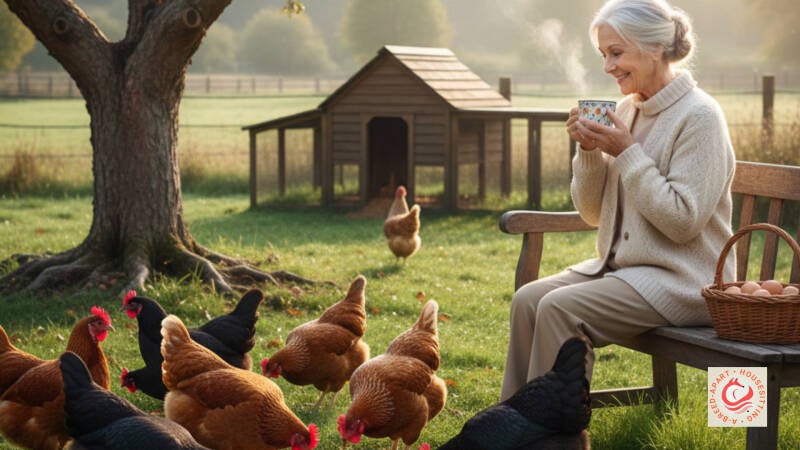
What Does UK Welfare Law Actually Require for Chickens?
At the heart of chicken keeping in the UK is the Animal Welfare (Licensing of Activities Involving Animals) (England) Regulations 2018 and the Animal Welfare Act 2006.
In simple terms, the law requires that all animals, including chickens, are provided with:
- A suitable environment
- A suitable diet
- The ability to exhibit normal behaviour patterns
- Housing with, or apart from, other animals as appropriate
- Protection from pain, suffering, injury, and disease
Importantly, UK law does not require backyard chickens to be free-range. Nor does it prohibit free-ranging. Instead, it focuses on outcomes: welfare, safety, and health.
You can read the full statutory guidance via DEFRA on GOV.UK:
👉 https://www.gov.uk/guidance/animal-welfare
The RSPCA’s detailed welfare standards for laying hens provide further clarity on good practice:
👉 https://www.rspca.org.uk/adviceandwelfare/farm/farmanimals/chickens
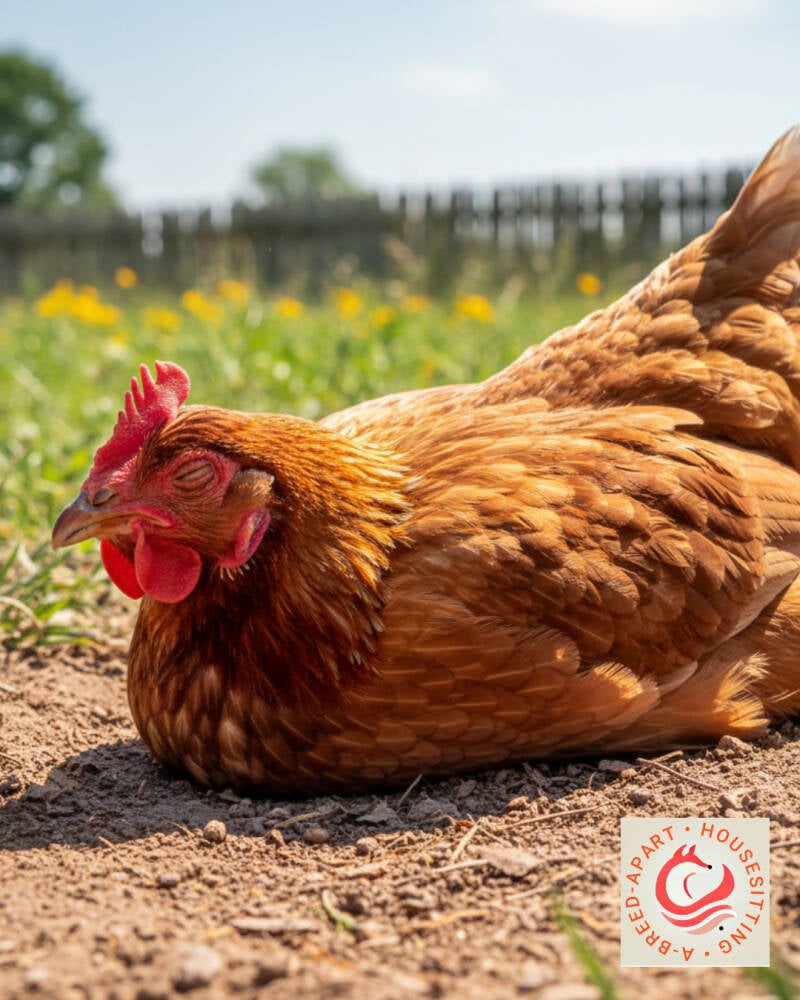
Space Requirements: What Is “Enough Room” for Chickens?
One of the most common welfare misunderstandings is space. Chickens may be small, but they are busy, social animals with clear behavioural needs.
Minimum Space in a Run (Best Practice)
While backyard keepers are not bound by commercial stocking densities, welfare organisations broadly recommend:
- At least 1 square metre per bird in an outdoor run as an absolute minimum
- 2–4 square metres per bird for good welfare
- More space if birds are confined long-term
Inside the coop, allow:
- 20–25 cm of perch space per bird
- One nest box per 3–4 hens
A cramped run leads quickly to feather pecking, bullying, mud build-up, and disease. More space almost always results in calmer, healthier birds.
Fully Free-Range Chickens: The Benefits and the Risks
The Welfare Upside
When conditions are right, free-range chickens can enjoy:
- Natural foraging behaviour
- Increased exercise and muscle tone
- Access to varied diet from insects and plants
- Reduced boredom and stress
From a behavioural perspective, this aligns beautifully with the “normal behaviour” requirement of UK welfare law.
The Countryside Reality Check
However, in much of rural England, free-ranging comes with inherent risks:
- Foxes remain one of the leading cause of chicken predation, even in daylight
- Birds of prey such as Common Buzzards and Goshawks may also prey on hens
- Dogs, especially local strays may see chickens as fair game
- Roads and farm machinery pose additional hazards
- Biosecurity risks increase during avian influenza restrictions
Many experienced poultry keepers will generally admit that almost every long-term free-range flock eventually loses birds, unless supervision is constant.
This post contains affiliate links. If you purchase through these links, I may earn a commission at no additional cost to you
Contained Runs: Are They Cruel or Sensible?
A properly designed chicken run is not a welfare compromise. In many countryside settings, it is the most responsible option.
When Runs Support Good Welfare
Chickens can thrive in runs that provide:
- Adequate space
- Dry ground with good drainage
- Enrichment (logs, perches, dust baths, hanging greens)
- Shelter from wind, rain, and summer sun
- Secure fencing with dig-proof skirts or buried mesh
Runs also make it far easier to comply with avian influenza housing orders, which may legally require birds to be contained.
DEFRA publishes current bird flu guidance here:
👉 https://www.gov.uk/guidance/avian-influenza-bird-flu
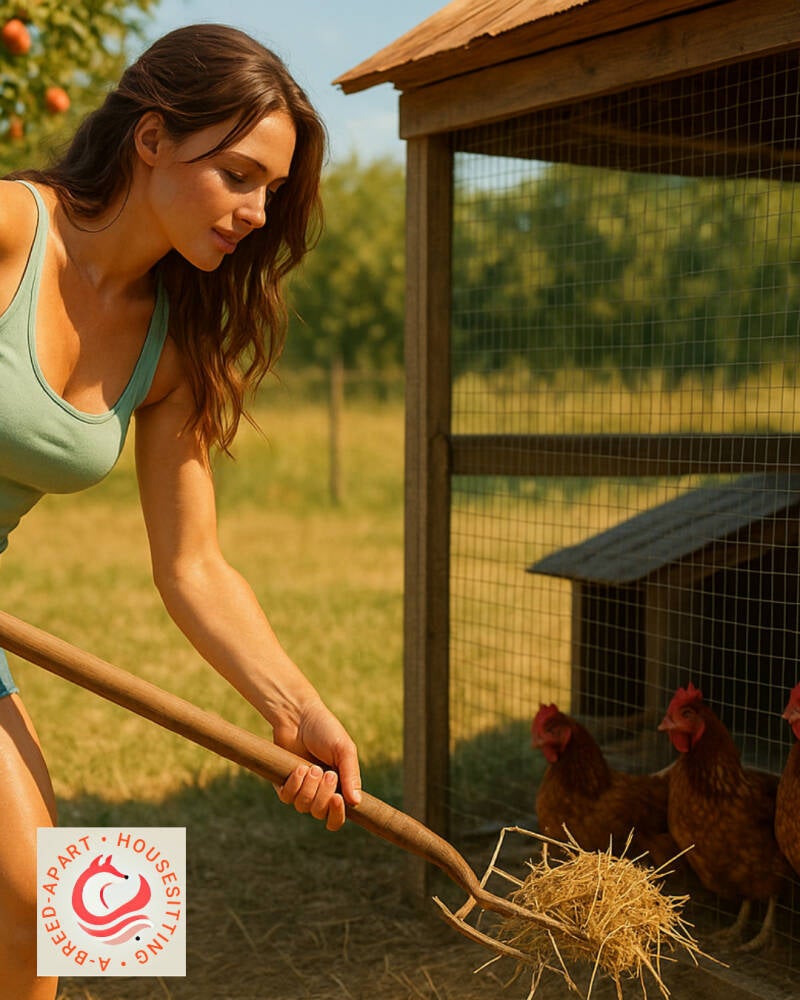
Common Mistakes That Cause Welfare Problems
Too many birds in too small a run
Bare earth turning to mud
No overhead protection from aerial predators
Lack of enrichment leading to boredom and aggression
These are design failures, not inherent flaws of containment.
Predator Risks in the English Countryside
For homeowners in rural areas, predator pressure is not hypothetical.
Foxes can:
- Dig under fencing overnight
- Climb surprisingly well
- Kill multiple birds in minutes
Birds of prey can:
- Strike from above, especially in open lawns
- Target lighter breeds
Rodents attracted to feed can:
- Spread disease
- Undermine coop foundations
A secure run with welded mesh (not chicken wire), covered roof netting or mesh, and anti-dig measures dramatically reduces losses.
Supervised Free-Range Plus Secure Containment
For many experienced keepers, the most successful model is controlled freedom.
What This Looks Like in Practice
- Chickens are kept in a secure run as their default
- Birds are allowed to free-range only when someone is present
- Free-range time is limited to safer daylight hours
- Birds are shut in well before dusk
- Seasonal adjustments are made during breeding seasons and flu restrictions
This approach delivers:
- Behavioural enrichment
- Lower predation losses
- Compliance with welfare and biosecurity rules
- Peace of mind when you are away from home
It is also the model that as a professional house sitter, we prefer when caring for poultry, as it reduces risk while maintaining welfare standards.
Marketplace
Automatic Chicken Feeder
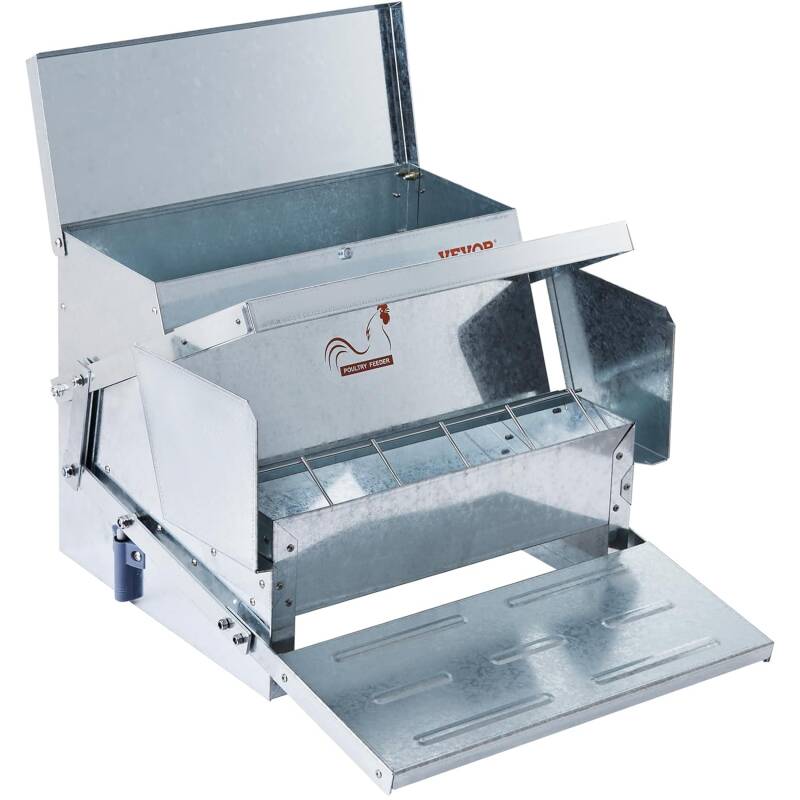
A practical automatic feeder that ensures consistent feeding, reduces waste, and limits rodent access, ideal for busy households or maintaining routines during short absences.
90L Large Galvanised Metal Dustbin

A robust, galvanised metal bin that deters rats, protects poultry feed, and helps reduce disease risk while keeping chicken areas tidy, secure, and well managed.
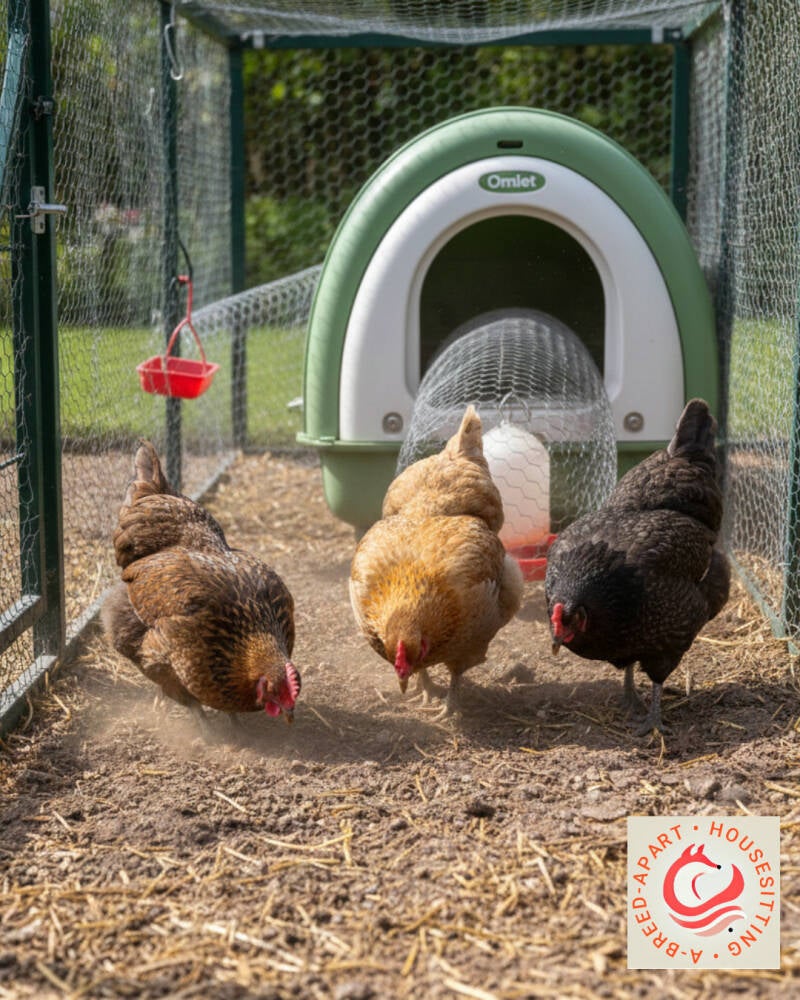
Omlet Eglu Cube Large Chicken Coop

A premium, easy-clean chicken coop designed for security, hygiene, and comfort, offering excellent protection from predators while simplifying daily care and long-term maintenance.
What About When You Go Away?
This is where theory meets reality. If chickens are left in the care of others, especially over multiple days, contained systems are significantly safer. Clear routines, secure housing, and predictable management reduce stress for birds and carers alike.
Many countryside homeowners now choose professional sitters experienced with poultry, ensuring consistent routines and secure handling. From a welfare perspective, predictability is as important as space.
So, Which Is Better: Free-Range or Run?
The honest answer: neither is inherently better. The best system is the one that:
- Meets UK welfare requirements
- Matches your land, predator pressure, and time availability
- Keeps birds safe, healthy, and calm
- Can be maintained consistently, even when you are away
For most rural households, a generous, enriched run with supervised free-range time strikes the most sensible balance between freedom and security.
In Summary
If you keep chickens, or are considering adding them to your home, take a moment to assess your setup honestly. Walk your boundaries. Watch the skies. Consider how your birds are managed when you are not there.
Good chicken keeping is not about ideals. It is about steady, informed stewardship, the same principle that underpins all responsible animal care in the countryside.
If you would like guidance on preparing poultry routines for holidays, house sitters, or seasonal changes, A-Breed-Apart regularly advises homeowners on secure, welfare-led animal care that respects privacy, routine, and peace of mind.
Related Blog Topics You May Wish to Explore
How To Introduce Chickens and Dogs Without Feathers Flying
7 Simple Steps to a Warm and Safe Indoor Puppy Playpen This Winter
The Most Popular Pet Products for 2026

Author Bio
Glenn Bauer, author of Housesitters Unleashed, is a trusted professional specialising in house and pet sitting for rural properties across the Cotswolds, West Oxfordshire, and Wiltshire. Alongside his wife Mandy, he provides dependable care for pets and rural homes, with complete respect for privacy and security.
Add comment
Comments