

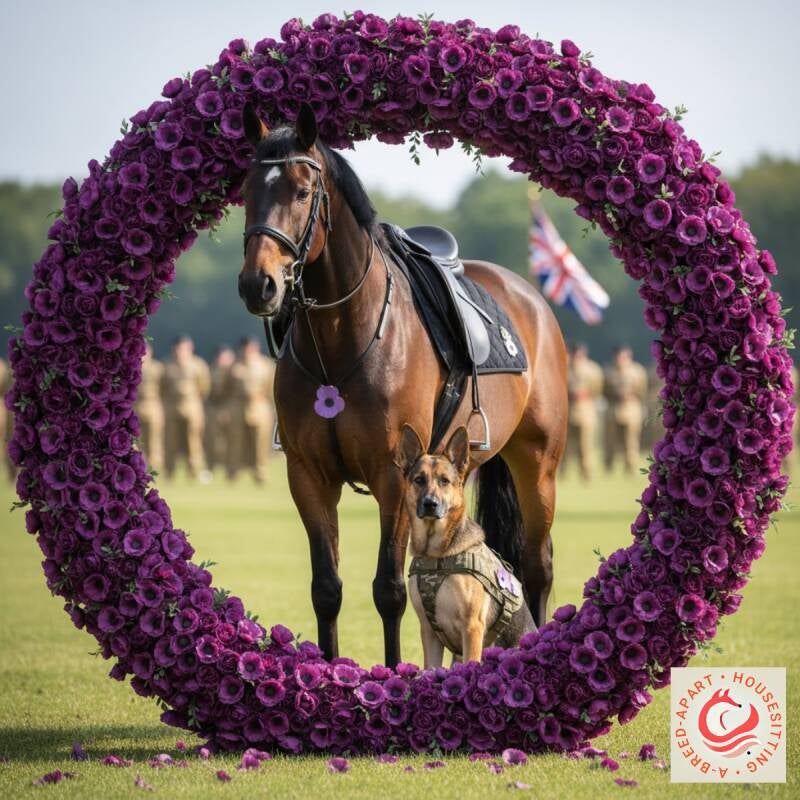
Every year on 24th February, people across the UK and the Commonwealth are asked to remember the animals killed while in military service. Marked by the purple poppy, International War Animal Remembrance Day acknowledges the horses, dogs, pigeons, elephants, camels, and even dolphins who served with courage, often paying the ultimate price.
While much of the day’s reflection centres on the estimated eight million horses lost during the First World War, the scope of remembrance has grown wider. From messenger pigeons that saved thousands of lives, to modern-day military dogs detecting explosives in conflict zones, these animals’ loyalty and service are an enduring testament to the human–animal bond.

The Purple Poppy and the Origins of Remembrance
The purple poppy was first introduced by the charity Animal Aid in 2006 as a companion to the traditional red poppy. Where the red poppy symbolises remembrance for human soldiers, the purple poppy honours animal service and sacrifice.
In recent years, other organisations such as Murphy’s Army Purple Poppy Campaign have taken up the mantle, helping the emblem become a familiar sight each February. Worn with pride, the purple poppy represents animals who served without choice, often enduring hardship and danger with unflinching loyalty.
Throughout the First and Second World Wars, animals played vital roles:
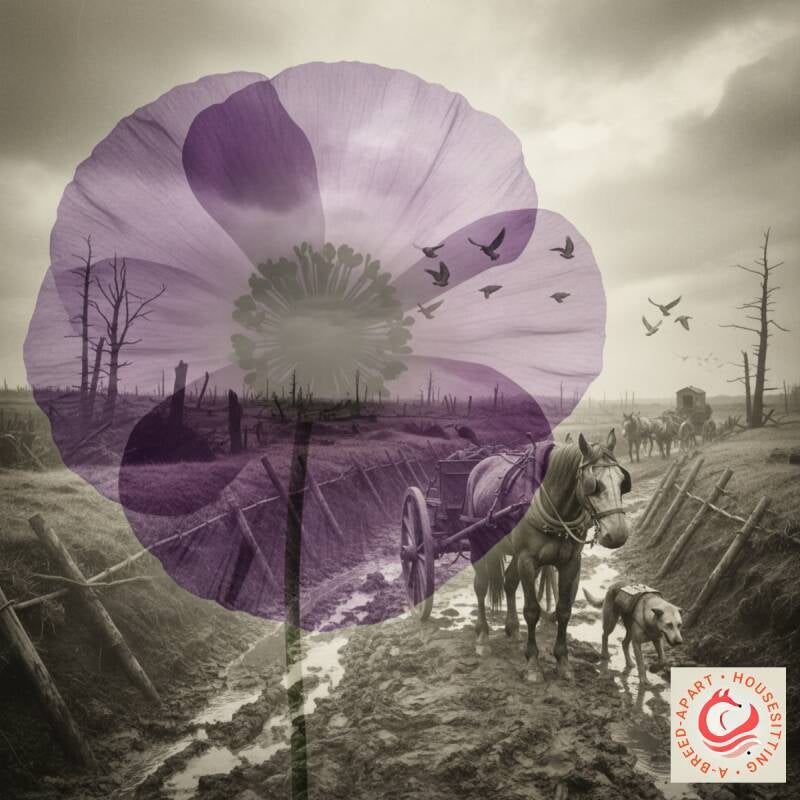
- Horses and mules carried supplies, wounded soldiers, and artillery through the mud and shellfire.
- Dogs acted as messengers, sentries, and medics – notably the famous Sergeant Stubby, an American war dog who saved countless lives by detecting gas attacks.
- Carrier pigeons, like Britain’s own Cher Ami, delivered critical messages through enemy fire, ensuring rescue missions could succeed.
- Camels and elephants transported equipment across unforgiving terrain.
- Even cats served aboard ships to control rodents and comfort sailors far from home.
These creatures were not conscripts but companions, offering courage where men faltered and comfort where words could not.
The Modern Military Animal
Today’s armed forces continue to rely on the unique abilities of animals, though their roles have evolved with technology and ethical awareness.
Modern military working dogs serve in bomb detection, search and rescue, and emotional support for troops deployed in high-stress environments. Breeds such as the Belgian Malinois and Labrador Retriever are prized for their intelligence, stamina, and steady temperament.
Meanwhile, the Royal Navy and allied navies still employ trained bottlenose dolphins and sea lions to detect underwater mines and guard harbours. Though controversial, these animals’ safety and welfare have become central to ongoing ethical reviews and research into robotic alternatives.
Even in peacetime, therapy and companion animals play a vital role in helping veterans adjust to civilian life, alleviating PTSD and loneliness with quiet, steady companionship, a service just as meaningful as that given on the battlefield.
Remembering with Respect
Commemorations for International War Animal Remembrance Day are held across the country, from London’s Animals in War Memorial on Park Lane to small village gatherings where the purple poppy is laid beside its red counterpart.
In recent years, schools and community groups have also begun hosting assemblies and walks dedicated to these animals, reminding younger generations that courage and sacrifice come in many forms.
If you visit the Animals in War Memorial, take note of the inscription carved into its Portland stone façade:
“They had no choice.”
Those four words capture the essence of the day, a recognition that these animals served out of loyalty, instinct, and trust, not duty or politics.
Supporting Ethical Charities and Animal Welfare
While remembrance is important, so too is ongoing care for service animals today. Many continue to work in challenging environments or retire with health conditions linked to their service.
If you’d like to honour them, consider donating to or volunteering with ethical charities that devote a high proportion of their funds directly to animal welfare, including:
- The National Military Working Dogs Memorial (UK) – supporting recognition and welfare for retired service dogs.
- Murphy’s Army Purple Poppy Campaign – raising awareness and supporting animal-related charities.
- Hounds for Heroes – providing assistance dogs to injured and disabled veterans.
- Blue Cross – one of Britain’s oldest animal welfare charities, founded during WWI to care for war horses.
Marketplace

Tabcat V2 Cat & Kitten Tracker
Never lose your cat again! The Tabcat V2 uses RF tech for precise tracking, perfect for adventurous kitties and peace of mind for owners.

Memorial Plaque
Honour a loved one’s memory with this beautifully crafted memorial plaque, an elegant, lasting tribute perfect for any garden or remembrance space.
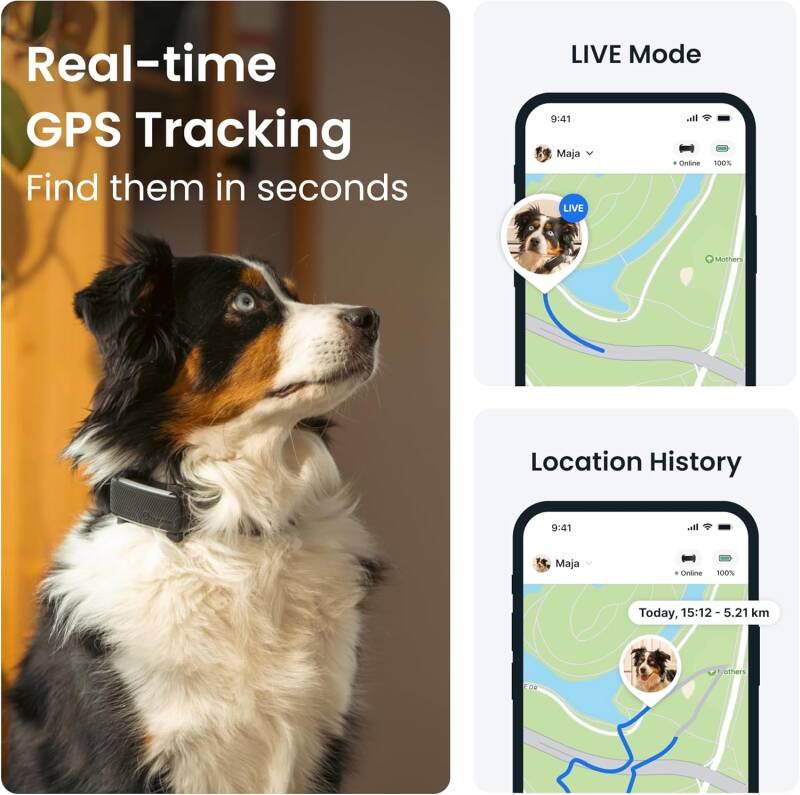
Tractive Smart Dog Tracker
Keep your dog safe and in sight with Tractive’s GPS tracker: Real-time location, activity monitoring, and peace of mind in one lightweight, waterproof device.
This International War Animal Remembrance Day, take a moment to buy and wear a purple poppy. Reflect on the silent service of those creatures who have carried, comforted, and protected soldiers through centuries of conflict.
If you’re able, support the charities working today to ensure retired service animals live with dignity and comfort. And if you share your life with an animal, perhaps give them an extra treat, not out of sentimentality, but in recognition of a bond as old as humanity itself.
Because remembrance is not just about looking back, it’s about caring forward.
Related Reads
How Dogs and Cats Show Affection: Love is in the Air
The Role of Therapy Dogs in Veteran Rehabilitation
The Blue Cross Legacy: Caring for Animals in Wartime Britain

Author Bio
Glenn Bauer is a mature, professional housesitting specialist providing trusted pet and property care across Wiltshire, the Cotswolds and West Berkshire. With over a thousand days of hands-on experience caring for rural homes and animals, Glenn and his wife Mandy are known for their professionalism, security-minded service, and calm reassurance for pets.
Contact Glenn and Mandy
Add comment
Comments